
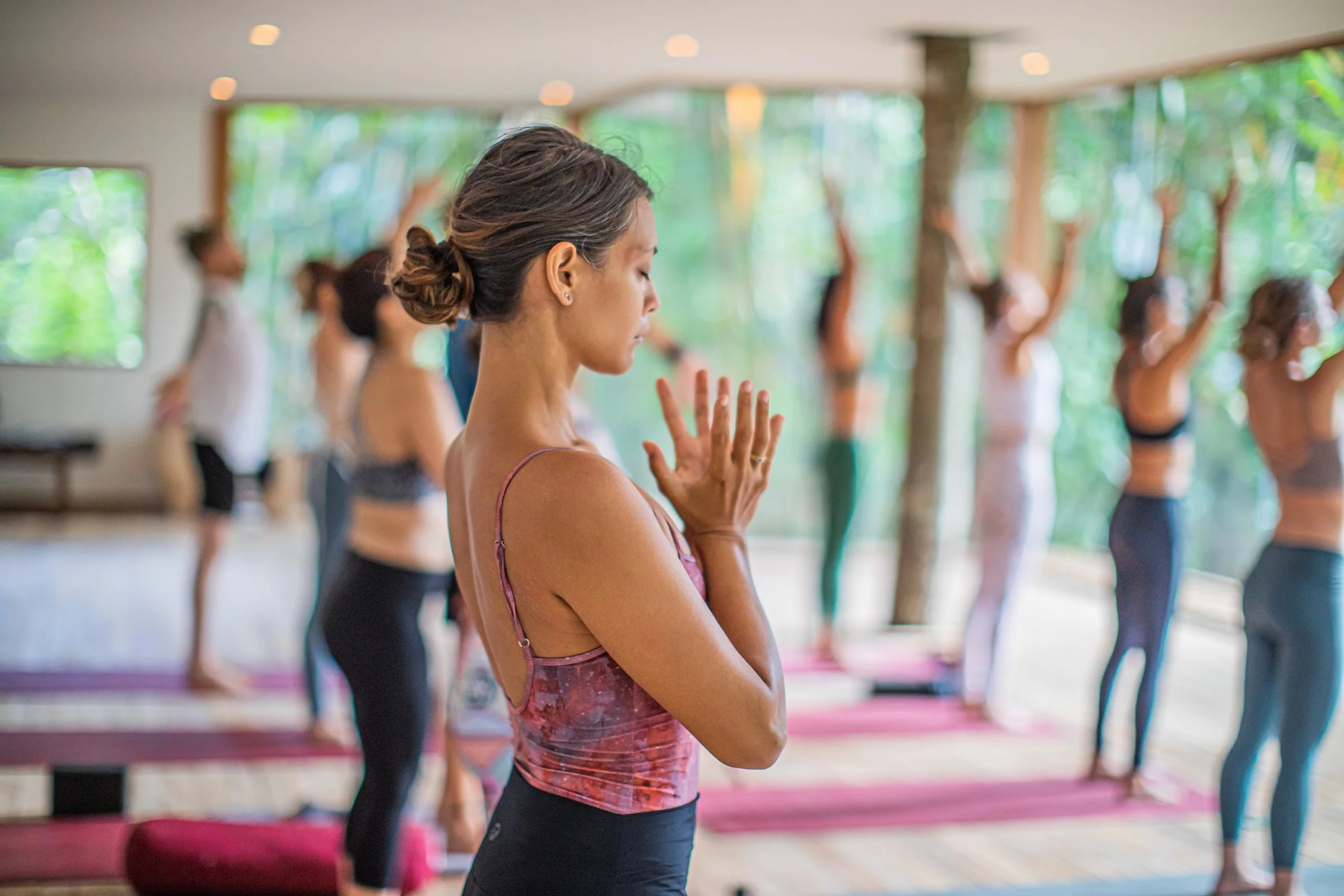
300-HOUR ADVANCED · YOGA ALLIANCE E-RYT 500 · UBUD, BALI
The training you take
after you already know
how to teach.
25 days inside a working yoga school in Ubud — for certified teachers ready to go further. Into craft. Into philosophy. Into the parts of teaching that take real time to develop.

900 +
ALUMNI WORLDWIDE
80 +
COUNTRIES REPRESENTED
150+
YOGA ALLIANCE REVIEWS
25+
RESIDENT TEACHERS
RYS-500
YOGA ALLIANCE SCHOOL

BEFORE YOU ENROLL
Is the 300HR right for you right now?
Most teachers who arrive at the 300hr have been circling it for months. The doubts are real — about timing, prerequisites, whether this is the right moment. This guide is not here to convince you. It is here to help you think clearly.
- Honest signals this training is right for you now
- When this format may not be the right fit
- Questions worth sitting with before you enrol
No spam. Unsubscribe any time.
WHAT THE 300HR IS
Not more of what you already did.
The next thing.
The 200hr builds a foundation. You learn to teach; safely, clearly, with confidence. That work is complete in itself.
The 300hr is for the teacher who has been doing it for a year or more, has stood in front of real students, and feels something deeper still asking. Not more techniques. A different quality of engagement with the practice, with the people in the room, with yourself as a teacher.
26 days in Ubud. In a school that has been here since 2010, with the same teachers, the same shalas, the same students coming back year after year.
Advanced teaching methodology
Not just more techniques. A deeper look at how you actually lead. Your cues, your presence, your ability to read and respond to a room in real time.
Philosophy as living practice
The Yoga Sutras, the Bhagavad Gita, Vedanta. Studied not as history but as a framework you actually use. At this level, philosophy isn't separate from practice.
Deeper personal practice
Advanced asana, functional anatomy, breathwork. For a teacher who already has a practice. Building depth, not just range.
Leadership and the long game
What it means to teach with real authority over time. How to sustain it. Where to go next. This is taught explicitly here — and it's rare.
WHO IS THIS FOR
This training is for you if…
You're teaching and want to teach better
You've led classes. Something is working. And something is still asking to go deeper — into your cues, your presence, your understanding of what's actually happening in the room when you teach.
You want your practice to mean more
The physical practice is familiar now. You want to work with what it opens — the philosophy, the breath, the inner dimension. You want a space that takes yoga seriously at that level.
You're ready for the E-RYT 500
The Yoga Alliance 500-hour credential is the marker of a senior teacher and trainer. This training qualifies you to register — but more importantly, it gives you the actual depth the credential represents.
Prerequisites: A valid 200hr RYT certification and at least one year of regular teaching. This is a continuing education programme for working teachers, not an entry point into teaching. If you're earlier in your path but feel strongly called to this level of work, reach out to us directly before enrolling — we'll be honest with you.
IN THER WORDS
What 300hr graduates say.
People who came, did the work, and went back to their teaching lives. Unedited.
"The faculty don't let you perform. They want the real thing, and they know how to help you find it. That's not common."
Marta Svensson · Sweden · 2023
"I came in thinking I needed more techniques. What I actually needed was depth of presence. The philosophy work alone changed how I teach."
James Okafor · UK · 2024
"The supervised teaching, real feedback, no softening, that's what made it serious. It's not comfortable. It's exactly what advanced training should be."
Anna Lindqvist · Sweden · 2022
"Two years later I'm co-facilitating RA retreats in Europe. I wouldn't have thought that was possible when I left Bali. The path just kept opening."
Liz · Germany · 300hr 2021 · RA Faculty Path
◆ YOGA ALLIANCE RYS-500 ◆ E-RYT 500 FACULTY ◆ 900+ ALUMNI NETWORK ◆ 150+ YOGA ALLIANCE REVIEWS
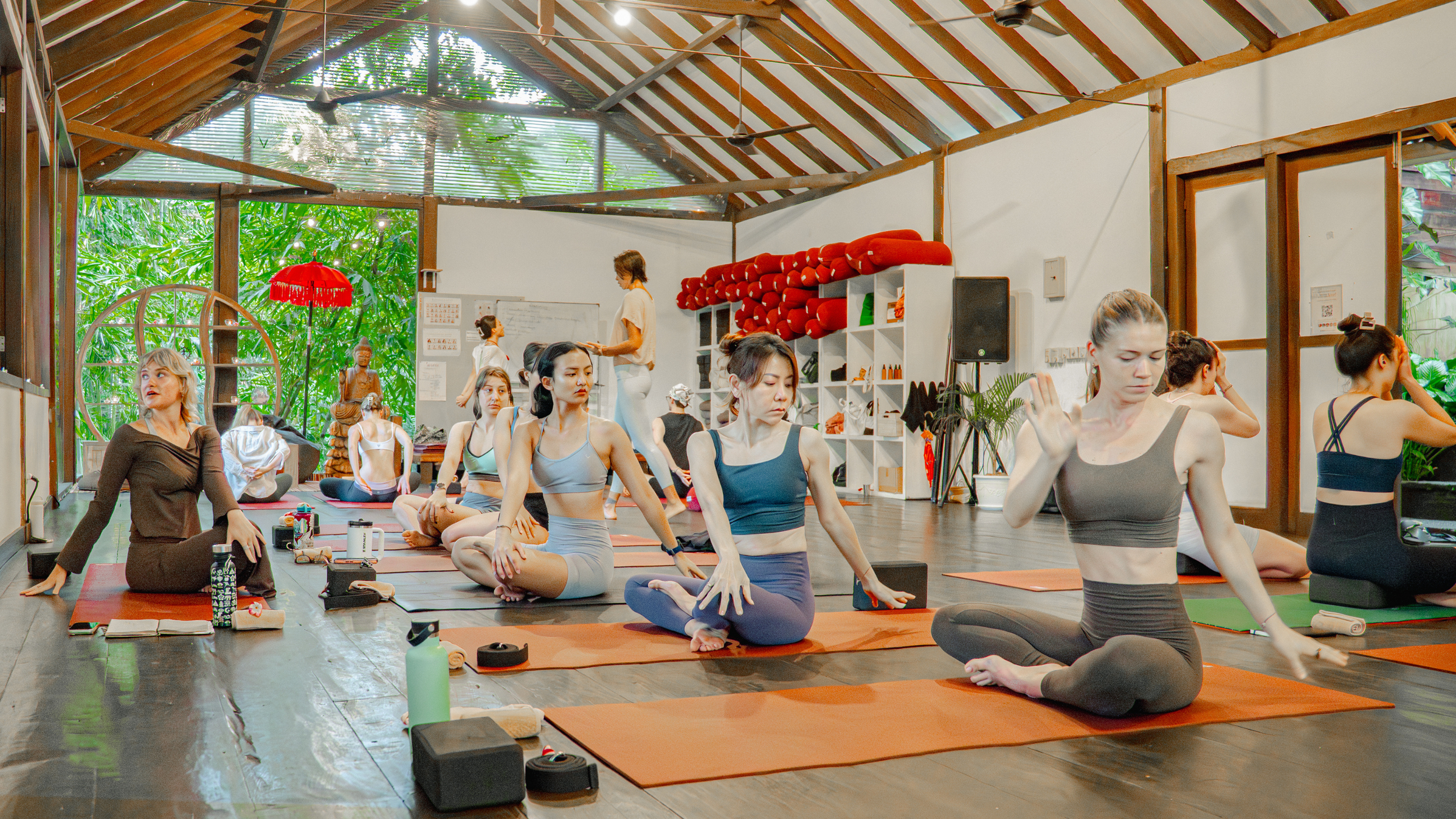

WHAT YOU'LL WORK ON
The Curriculum
Six core areas across 25 days. Not taught as subjects, taught as practices. Each one is something you'll carry back into your teaching, not something you'll file away.
Advanced Teaching Methodology
The deepest work of the training. How you cue, sequence, and adapt — studied at a level that goes past technique. Supervised practice teaching with direct feedback from faculty who have been training teachers for over a decade. You'll be challenged on your habits and asked to teach with more precision, more responsiveness, more presence.
Advanced Asana Exploration
RA Vinyasa at an advanced level — for a teacher who already has a practice. Arm balances, backbends, inversions and their architecture. How to teach complex postures to students with different bodies and different histories. The asana curriculum is about refinement and intelligent risk — not adding more shapes.
Applied Anatomy & Biomechanics
Functional anatomy for the advanced practitioner. Joint mechanics, fascia, the nervous system. How to read a body, spot compensation patterns, and modify with real understanding rather than borrowed rules. Guest specialist teaching is integrated into this module. Graduates consistently say this is among the most practically useful work of the entire training.
Yoga Philosophy & Living Inquiry
Patanjali's Yoga Sutras, the Bhagavad Gita, Vedanta. Studied seriously — not as a history lesson. Philosophy at this level is a framework for examining how you practice, how you teach, and how you move through your life. Daily meditation and pranayama build the experiential ground the study needs.
Pranayama, Restorative & Yin
The energetic side of practice — taught rigorously. Classical pranayama, its physiological basis, and how to introduce it safely in class. Restorative and Yin studied as distinct disciplines, not as recovery. A teacher at the 500-hour level should be able to hold every end of the practice spectrum. This module builds that range.
Leadership, Voice & the Path That Comes Next
What it means to teach at this level — and to keep teaching well over time. Your voice as a teacher: how it's distinct, how to refine it, how not to lose it. How to build a sustainable career. How to lead without performing. This module also looks honestly at what comes after the 300hr: ongoing mentorship, the possibility of contributing to RA trainings and events, the alumni network you're stepping into, and what the longer teacher path can look like when it's pursued with intention.
Several current RA faculty and event co-facilitators are 300hr graduates. That path exists — we discuss it plainly here, without making it a sales pitch.
WHAT THE WORK PRODUCES
This is what shifts after 25 days of this work.
Not a different style. A different foundation. Most teachers leave with the same technique they arrived with — and a fundamentally different understanding of what they're doing with it.
You build classes around poses.
AfterYou build classes around principles.
You rely on sequences that worked before.
AfterYou understand how to create them from scratch.
You teach what worked for you.
AfterYou teach what serves the room.
You guide people through movement.
AfterYou facilitate what the practice opens.
These are not outcomes we promise. They are patterns we have observed across a decade of 300hr cohorts.

THE FACULTY
People who are still genuinely in it.
The 300hr faculty are not presenting a curriculum they wrote ten years ago. They are practitioners with long personal practices and active teaching lives. The combination matters — Kimberley brings methodology and inner-process depth; Vijeth brings lineage and textual rigor; Chris brings body intelligence that challenges assumptions. You'll feel the difference between teachers who coordinate and teachers who genuinely complement each other
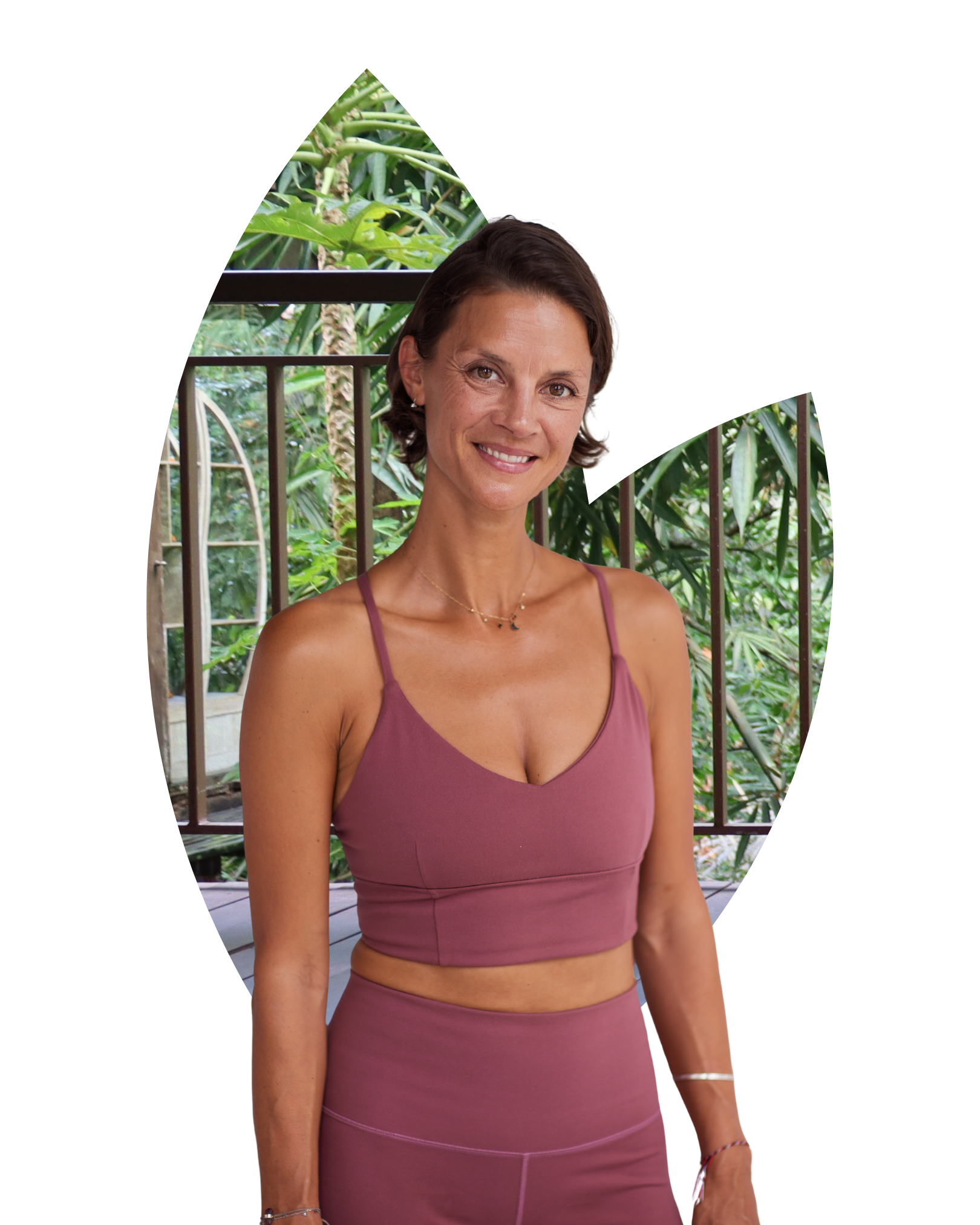
LEAD TEACHER · E-RYT 500
Joëlle Sleebos
Joëlle Sleebos is an E-RYT 500 yoga teacher, teacher trainer, and mentor who facilitates 200- and 300-hour trainings worldwide. Her teaching integrates Vinyasa, Yin, pranayama, meditation, and yogic philosophy, blending traditional practices with a modern understanding of the nervous system and the deeper layers of the body.
With a background in economics and project management, Joëlle brings clarity, structure, and depth to her trainings. She guides students through a transformative journey of self-exploration, embodiment, and authentic expression.
Rooted in emotional safety, intuitive embodiment, and quiet strength, Joëlle’s approach is both bold and tender. She supports teachers not only in refining their skills, but in cultivating self-trust and connecting to their inner guidance. Her work invites an honest inner journey, empowering students to embody authenticity, integrity, and confidence in their voice and path
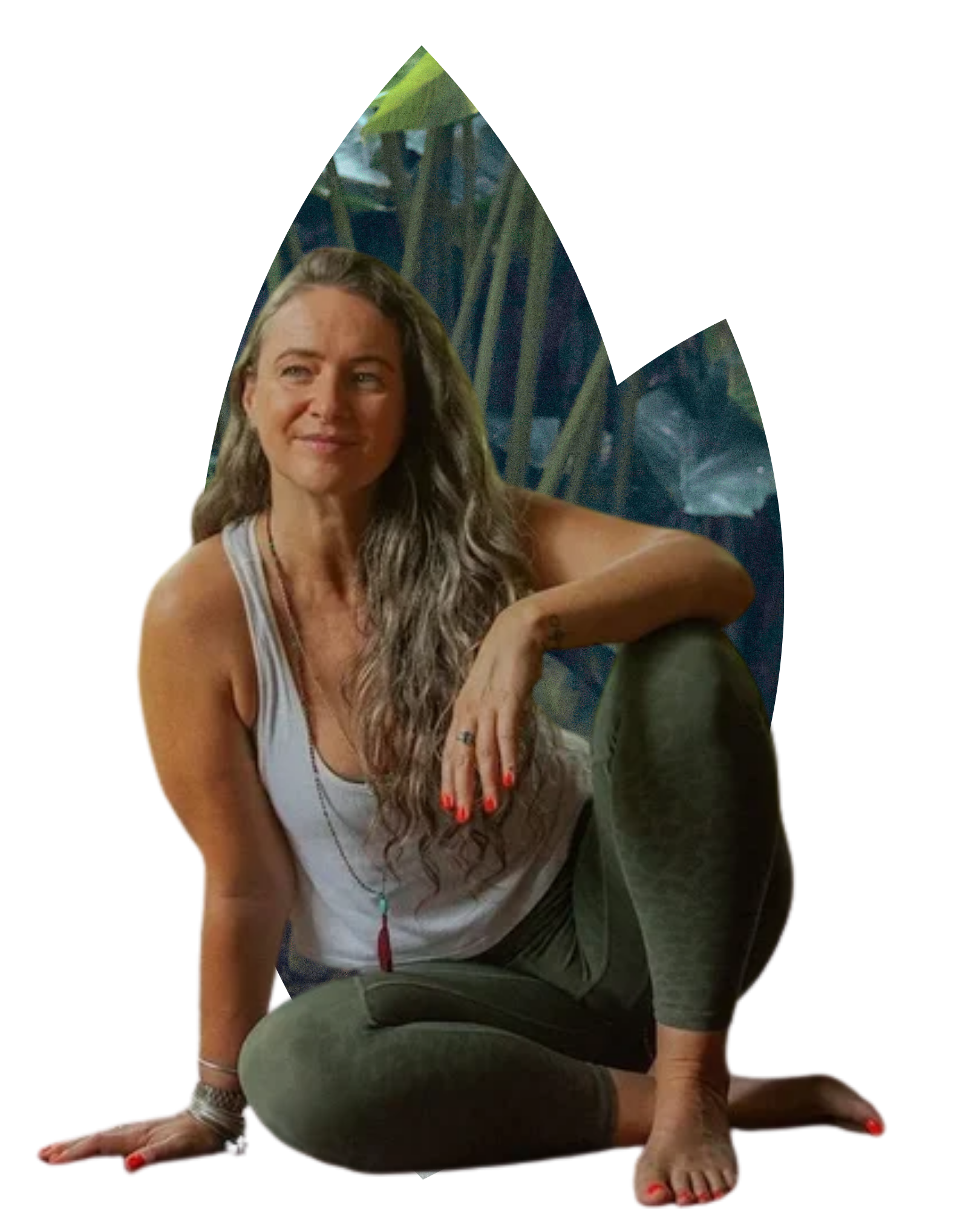
LEAD TEACHER · E-RYT 500
Zara Miranda
Zara is a senior accredited yoga teacher with over 12 years of experience teaching in London and internationally. Originally trained in India in Ashtanga and Vinyasa Flow, and later continuing her studies with globally recognised teacher Eoin Finn, she integrates the discipline, awareness, and intelligence of these traditions with meditation, somatic practices, Yin, and healing modalities.
Yoga became a powerful pathway of self-discovery and transformation for Zara, inspiring her to share the practices that have supported her own journey. Her teaching is rooted in the belief that yoga is not simply a physical practice, but an invitation into deeper self-awareness, connection, and conscious living.
Zara’s intuitive awareness of the students in front of her allows her to create spaces where people feel supported to honour their bodies, energy, and individual experience. Bringing warmth, humour, compassion, and thoughtful reflection into every class, she encourages curiosity, self-inquiry, and a deeper relationship with the body, mind, and soul. Beyond the mat, she holds ceremonies, guided meditations, and one-to-one healing sessions.
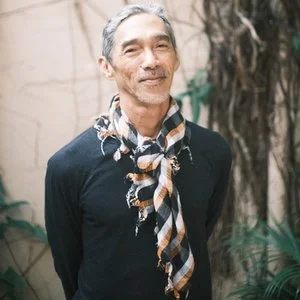
Ade Adinata
Authorized Level 2 by Sharath Jois, Ade focuses on simplicity to guide students toward focus. With 10 years of teaching across various styles, he has spent the last 7 years dedicated to sharing the Ashtanga method and philosophy.
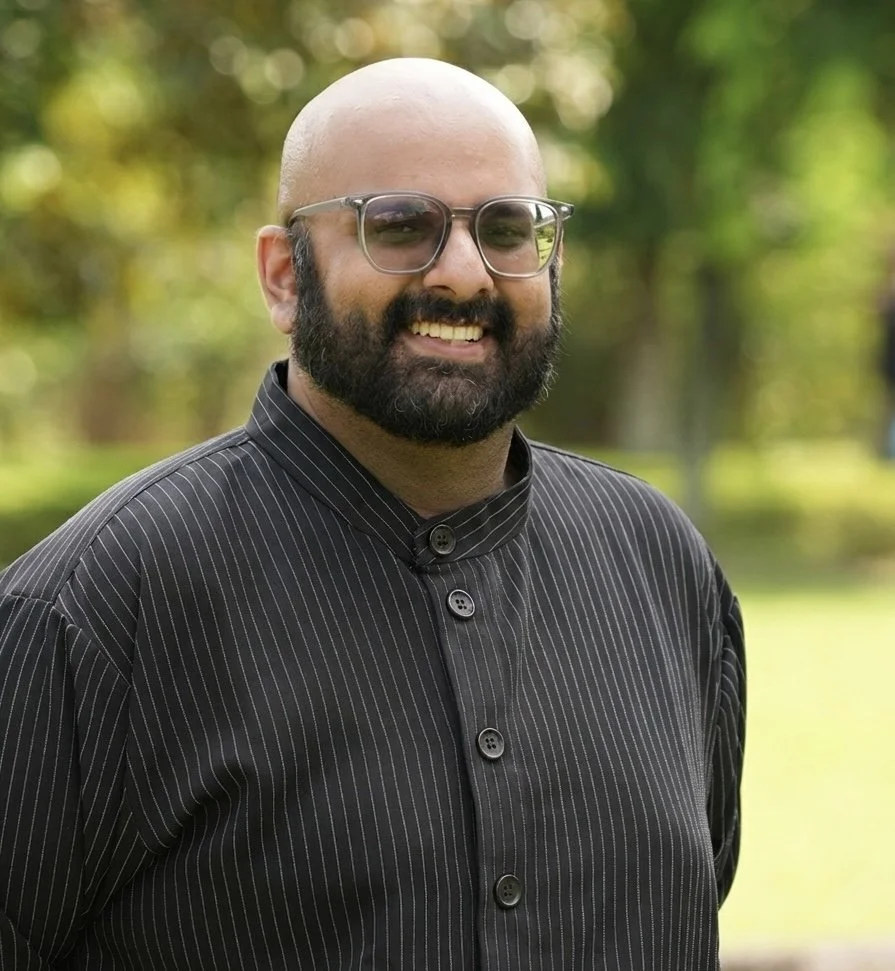
Dr. Ravinjay Kuckreja
A resident of Bali for over a decade, Ravinjay holds a doctorate in ancient scriptures. He presents philosophy as a living inquiry reading directly from Sanskrit, remaining precise about texts and their application in daily practice.
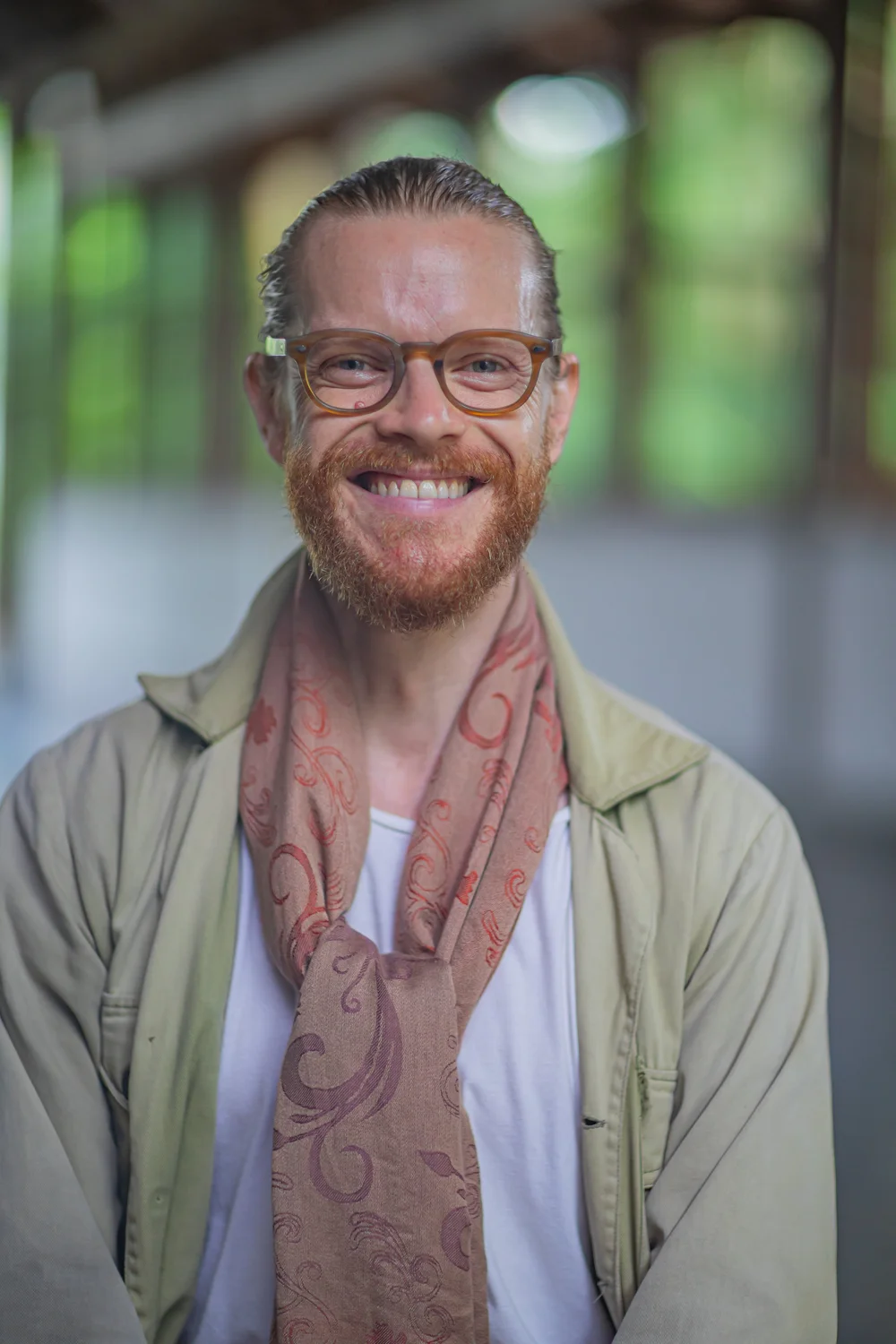
Chris Fox
A Movement Educator and FRC Mobility Specialist. Chris brings progressive knowledge from physical therapy and resistance training into his methods, emphasizing sustainability, inclusivity, and body intelligence.
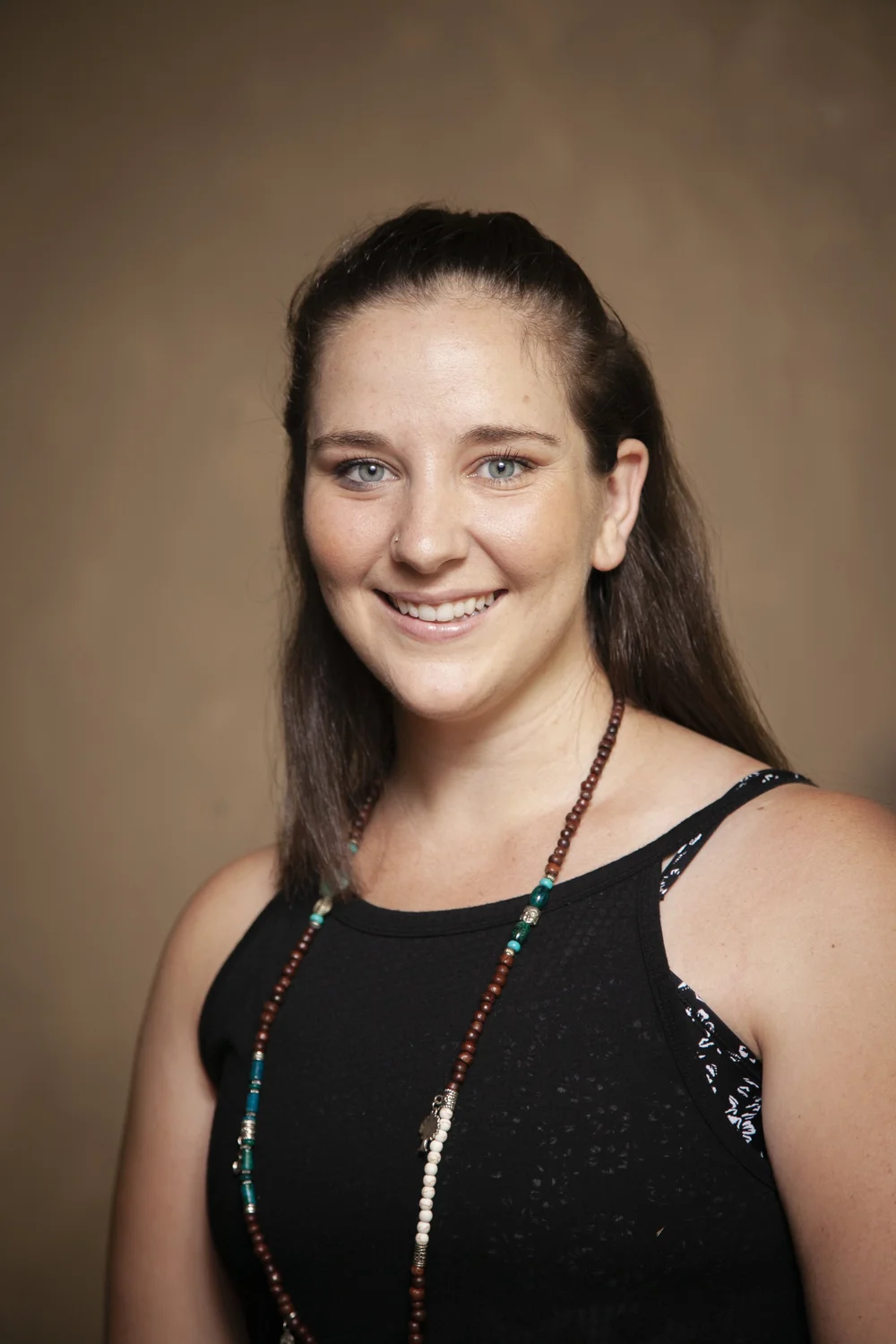
Lucinda Muldoon
With 10 years as an Exercise Physiologist, Lucinda integrates Fascial Bodywork and Pre/Postnatal expertise into the training. She encourages moving from an intentional place, embracing a ‘soft but strong’ approach to practice.
Guest Faculty
Each cohort brings in specialist teachers for dedicated modules — restorative yoga, yoga nidra, and advanced pranayama. Guest faculty vary by cohort, and many are RA alumni who have developed specialist expertise.
The 300hr is anchored by Joëlle and Zara, who hold the pedagogical thread and the refinement of teaching craft. They are supported by a specialist team that adds scholarly and technical depth: Ade brings lineage and focus; Rav Jay provides textual rigor; Chris challenges assumptions from a movement-science perspective; Lucinda integrates embodied philosophical depth.
This team doesn't overlap — they triangulate. Students often say the friction between these perspectives is what makes the training genuinely advanced.
The school's broader teaching community — 25+ teachers on staff — means the training doesn't happen in a bubble. You're training inside an active studio ecosystem. That matters more than it sounds.

WHAT YOU'LL TRAIN
A real school.
Not a rented venue.
Most teacher trainings in Bali rent a shala, a villa or retreat centre for the month. Radiantly Alive has been in Ubud since 2010 with a permanent studio, resident teachers, a daily class schedule, a café, and students who come every week not because there's a training, but because this is where they practice.
When you train here, you step into something with its own rhythm and culture. That's different from training in a space that was set up for you and disappears when you leave.
You have unlimited access to the full class schedule before, during, and after the training. Morning classes, yin, restorative, meditation, breathwork. You're not just attending a training. You're inside an active practice community for a month.
Daily access to studio classes
Full class schedule access from one week before the training to one week after. You're not just training, you're living inside an active yoga school for a month.
RA Studio Café on site
Plant-based food available at training rates, on site. The café is where the cohort tends to gather between sessions, that informality matters for what happens in the room.
Ubud - the right environment for this work
Not tourism copy. Ubud is genuinely slower, more inward. The pace supports intensive study in a way most cities don't. The cultural relationship to practice here is real. You feel it within a few days.
Cultural excursions and ceremonies
Integrated into the programme schedule where relevant — approached with genuine respect and context, not as tourism add-ons.
Accommodation guide provided
Curated options across all budgets, within walking or short ride distance from the studio. Included in the programme pack.

WHAT YOU'LL TRAIN
Sample daily
schedule
Structured days. Intensive mornings. Evenings mostly yours. The rhythm is designed to allow depth without burning people out in week one.
Exact schedule varies across the 25 days. Full programme provided in preparatory materials.
Why the structure is built this way
The morning sadhana is personal practice — separate from your teaching practice. By week three, that distinction tends to be one of the more significant things that shifts. You start to understand what you actually need from the mat, versus what you perform on it.
The teaching lab sessions are where most of the real work happens. Small groups. Supervised peer teaching. Specific feedback — direct, not cushioned. Not comfortable. Necessary.
The anatomy and philosophy sessions in the afternoon are designed to be integrated with, not isolated from, the morning practice. What you study shapes how you move the next day.
Evenings are mostly unstructured. That's deliberate. The depth that becomes available in 25 days depends on people actually resting.
AFTER THE TRAINING
The 300hr is
a door, not a destination.
MOST SCHOOLS ISSUE A CERTIFICATE.
VERY FEW CONTINUE SUPPORTING GRADUATES
YEARS AFTER THEY LEAVE.
Worldwide
Represented
in Ubud
Ongoing Community
An active network of working teachers
900+ graduates across 80 countries. Not a mailing list — teachers who trained together, stay in contact, and continue developing alongside one another.
Ongoing development beyond the certificate
Some graduates return to assist future cohorts. Others co-facilitate RA events in Europe and elsewhere. The relationship with the school doesn't end at graduation.
Part of something with a longer arc
Radiantly Alive is not running isolated trainings. It is building a community of teachers with shared values, shared standards, and a shared understanding of practice.
"The doors just keep opening. I did my 300hr and Radiantly Alive has shown me what it actually looks like to walk this path long-term, as a teacher and as a person."
— Liz · Germany · 300hr Graduate · RA Faculty Path
Curious what happens after graduation?
We've created a short guide exploring:
What the first year after graduation often looks like
How graduates stay connected to the community
The different ways teachers continue developing within the wider Radiantly Alive ecosystem
No pressure. Unsubscribe any time.
Most teachers leave Bali and return to their lives changed. Some continue developing through further trainings, mentorship, collaborations, and teaching opportunities within the wider RA community.
There is no formal programme and nothing is guaranteed. But over fifteen years, we've watched many graduates stay connected to the school and to one another in ways that continue long after the training ends.
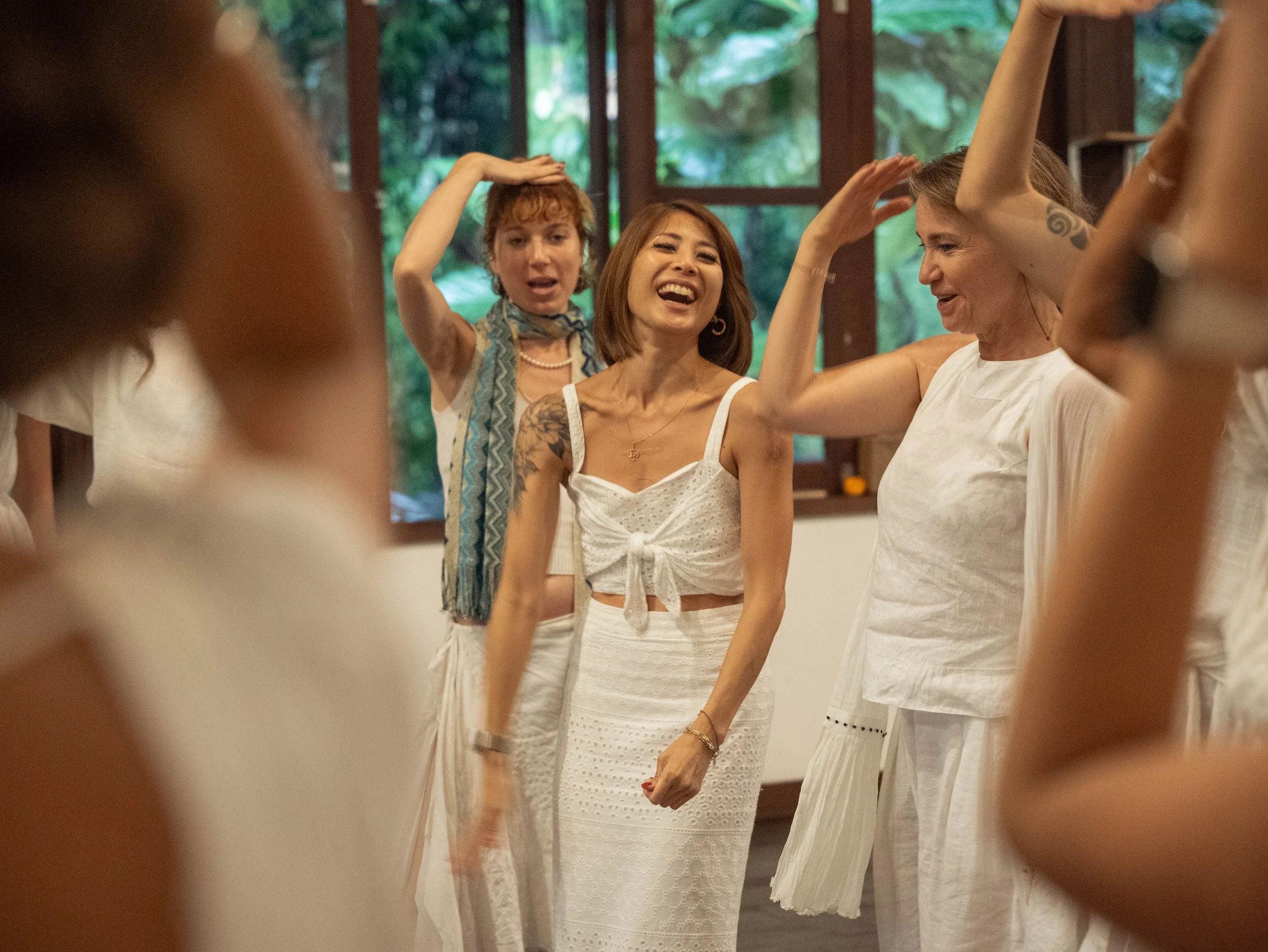
Still wondering if this training is the right next step?
Every teacher arrives with a different background and level of experience.
If you'd like to talk through whether this training is the right fit for where you are, we'd love to hear from you.
UPCOMING COHORTS
Training Dates
One cohort open for 2026, two for 2027. Places are limited to 20 per immersion.
November 2026
2 – 27 November · 27 days
Led by Joëlle Sleebos
May 2027
3 – 28 May · 27 days
Led by Joëlle Sleebos
November 2027
1 – 26 November · 27 days
Led by Joëlle Sleebo
INVESTMENT
Your Investment
A 27-day immersion with world-class faculty in a real, working studio. The pricing reflects that.
EARLY COMMITMENT PRICE
IDR 51.6 millions
(US$2,900)
Full tuition paid at enrolment. Available until the first 8 places in each cohort are filled. This option closes without notice once those places are taken.

2026 | November 2 - 27
2027 | May 3 - 28
2027 | November 1 - 26
REGULAR PRICE
IDR 62.3 millions
(US$3,500)
Hold your place with a USD 1,000 deposit. The remaining balance of USD 2,500 is due 30 days before your cohort begins.
2026 | November 2 - 27
2027 | May 3 - 28
2027 | November 1 - 26
All prices are in Indonesian Rupiah. The deposit is non-refundable but transferable to another cohort with 60 days notice.
What tuition includes
QUESTIONS
Frequently asked.
The ones that come up most. If yours isn't here, ask us directly.
ENROLLMENT
If this is the right next step, we'd like to hear from you.
The application is short, about 10 minutes. We'll come back to you within 48 hours. No commitment until you receive and accept a formal offer of a place.
300-Hour · Yoga Alliance RYS-500 · Ubud, Bali · radiantlyalive.com
PRACTICAL INFORMATION
Before you come
Practical details to help you plan. If anything is unclear, send us a message.
Getting into Indonesia
Your passport needs a minimum of 18 months' validity at entry. Most nationalities get a 30-day visa on arrival at Bali's Ngurah Rai Airport, extendable to 60 days. Check the current requirements with your local Indonesian consulate.
Where to stay
Ubud has options across all budgets — simple guesthouses from ~$30/night, boutique villas at $80–200/night. Most participants stay within 10–20 minutes of the studio. We send a curated guide with your pack.
Transport in Ubud
Ubud is walkable from most nearby accommodation. Grab and Gojek (ride-share) are inexpensive for longer distances. Many participants rent a scooter. The studio is central and well-known to local drivers.
What to bring
HAVE A QUESTION BEFORE ENROLLING?
We answer personally. Not from a template.
About prerequisites, the curriculum, which cohort makes most sense for where you are — ask us. We respond within one working day. The team is based in Ubud.
STAYING IN UBUD
Accommodation isn't included. That's intentional.
Students arrive with different needs for privacy, quiet, budget, and how they want to rest between sessions. Staying independently gives you that freedom, and supports real integration at the end of each day.
The studio is in the heart of Ubud. Most students find accommodation within easy walking distance guesthouses, small hotels, and family-run stays are minutes from the shala. Cafés, markets, and everything you need for daily life are close by.
We provide a curated list of trusted options before your arrival, organised by style and budget. If you have questions about where to stay, we're available to help.
The shala is in central Ubud. Restaurants, rice fields, and temples are a short walk in every direction.
Most students stay within 5–15 minutes on foot. A scooter or ojek makes anywhere in Ubud easy to reach.
We recommend arriving 2–3 days early to settle in, adjust to the rhythm, and start the training rested.
Family-run guesthouses
Small, quiet, and close to the studio. Usually include breakfast and a garden or rice field view. Typically IDR 250,000–500,000 per night. The most common choice among our students.
Small boutique hotels
Private pool, daily cleaning, and a bit more space to decompress after long training days. A good option if you need your environment to feel restful and well-resourced.
FOOD & DAILY RHYTHM
Ubud has an abundance of cafés and warung serving nourishing food at every price point. Training days include a lunch break, most students eat nearby and return to the shala. Evenings are yours to explore. You won't need to think hard about food here.